
Introduction to Intelligent AI Software
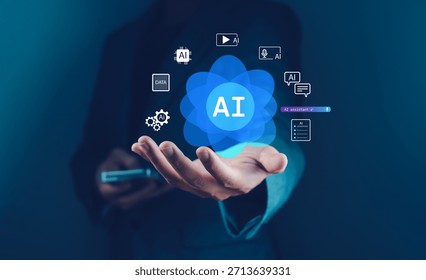
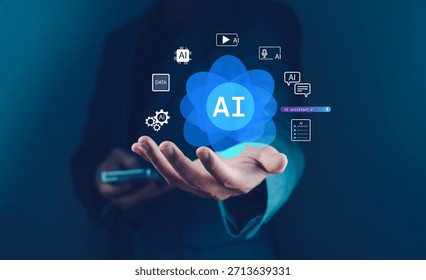
With the rapid development of artificial intelligence technology, intelligent AI software has gradually become an indispensable part of people’s daily life, industrial production and scientific research. Different from traditional ordinary software that only executes fixed program instructions, AI software has independent learning, intelligent analysis, automatic judgment and adaptive optimization capabilities. It can simulate human thinking logic, process complex data information, and provide accurate and efficient solutions for various scenarios.
Intelligent AI software relies on core technologies such as machine learning, deep learning, natural language processing and computer vision. It can continuously optimize its operation effect through data accumulation, break through the limitations of traditional software’s fixed functions, and realize intelligent upgrading from "passive execution" to "active service". At present, AI software has been widely used in education, office, medical treatment, entertainment, manufacturing and many other fields.
Core Classification of Intelligent AI Software
2.1 Intelligent Office AI Software
2.1.1 Intelligent Text and Creation Tools
This type of AI software is mainly used to assist users in text creation, content optimization and data sorting. It can automatically generate articles, reports, summaries and copywriting according to user needs, and realize intelligent proofreading, grammar correction and language polishing. It greatly reduces the time cost of manual writing and improves the efficiency of daily office and academic creation. Common representative tools include intelligent writing assistants and document sorting software.
2.1.2 Intelligent Data Analysis Software
AI data analysis software can automatically collect, screen, count and analyze massive complex data. Different from traditional data statistical tools, it can mine potential data rules, generate visual analysis reports, and put forward targeted optimization suggestions. It is widely used in enterprise operation analysis, market research, financial statistics and other business scenarios, helping decision-makers quickly grasp core information.
2.2 Multimedia AI Intelligent Software
2.2.1 AI Image and Video Processing Software
Multimedia AI software focuses on intelligent processing of pictures, videos and audio. It supports one-click image beautification, background matting, picture restoration, video intelligent editing, automatic subtitling and material matching. This kind of software simplifies the complex operation steps of traditional multimedia production software. Even users without professional design foundation can quickly complete high-quality audio-visual works, which is widely used in short video production, graphic design and publicity creation.
2.2.2 AI Voice Intelligent Tools
AI voice software includes voice translation, voice transcription, intelligent dubbing and voice recognition tools. It can realize real-time conversion between voice and text, multi-language intelligent translation, and simulated human voice dubbing. It is commonly used in meeting recording, cross-language communication, video dubbing and daily voice input, effectively breaking language and efficiency barriers in information transmission.
2.3 Life and Learning AI Software
2.3.1 Intelligent Learning Assistant Software
Educational AI software is designed for personalized learning scenarios. It can intelligently analyze users’ learning weaknesses, formulate targeted learning plans, provide one-on-one tutoring explanations, and automatically correct exercise errors. It changes the traditional single learning mode, realizes personalized and intelligent teaching assistance, and helps students improve learning efficiency in a targeted manner.
2.3.2 Daily Intelligent Service Software
Daily life AI software includes intelligent voice assistants, intelligent recommendation systems and life service tools. It can realize voice control, intelligent schedule reminder, personalized content recommendation, intelligent navigation and life query services. It integrates into mobile phones, smart homes and various terminal devices, bringing convenient and intelligent experience to users’ daily life.

3. Core Advantages of Intelligent AI Software
3.1 Strong Independent Learning Ability
The biggest difference between AI software and traditional software is its self-learning and iterative optimization capability. Traditional software can only run according to preset fixed programs, while AI software can continuously absorb new data and user feedback, adjust operation algorithms, and gradually improve service accuracy and intelligence level. The more abundant the accumulated data is, the more accurate and efficient the software operation effect will be.
3.2 Improve Work and Learning Efficiency
AI software replaces a large number of repetitive, mechanical and high-intensity manual work, such as text sorting, data statistics, video editing and error checking. It can complete massive tasks in a short time that manual work takes hours or even days to finish. It not only saves a lot of time and labor costs, but also avoids errors caused by manual operation, and greatly improves the overall work and learning efficiency.
3.3 Realize Personalized Customized Services
Intelligent AI software can accurately capture users’ usage habits, demand preferences and behavior characteristics through big data analysis. It can provide personalized customized services for different users, instead of single and unified functional services of traditional software. Whether it is personalized learning plans, customized content recommendations or exclusive office assistance, it can meet the differentiated needs of users and improve user experience.
4. Potential Risks and Usage Specifications
4.1 Main Risks of AI Software
4.1.1 Personal Privacy Leakage Risk
Most AI software needs to collect user data, browsing records, usage habits and personal information to realize intelligent analysis and personalized services. If the software platform lacks perfect data protection mechanisms, users’ private information may be leaked, stolen or illegally used, bringing hidden dangers to personal information security and property safety.
4.1.2 Content Authenticity and Reliability Risks
AI-generated texts, pictures, videos and data contents may have problems such as factual errors, logical deviations and false information. Affected by training data and algorithm limitations, AI software cannot guarantee 100% accuracy of all output contents. Blindly trusting AI-generated results may lead to wrong decisions and content errors.
4.2 Standardized Usage Principles
4.2.1 Protect Personal Data Security
When using intelligent AI software, users should avoid uploading and filling in sensitive personal information, private files and important data. It is necessary to turn off unnecessary permission authorization, regularly check data sharing settings, and choose formal and legal AI software platforms to prevent privacy leakage.
4.2.2 Verify AI Generated Content
All contents generated by AI software must be manually checked and verified before use. For academic creation, office reports and public release contents, users need to correct errors, optimize logic and verify authenticity to ensure the accuracy and rigor of the final content.
5. Future Development Trend of AI Software
In the future, intelligent AI software will develop towards higher intelligence, stronger professionalism and safer application. With the continuous progress of artificial intelligence algorithms and big data technology, AI software will be more accurate in scene recognition, content creation and data analysis. At the same time, it will pay more attention to data security and privacy protection, and form more standardized industry application norms.
In addition, AI software will realize deeper integration with various industries. Intelligent office, intelligent education, intelligent medical treatment and intelligent manufacturing will be further popularized, becoming an important driving force for social efficiency improvement and industrial upgrading, and bringing more intelligent and convenient changes to human production and life.
6. Conclusion
Intelligent AI software is an important product of the development of artificial intelligence technology, with unique advantages of intelligent learning, efficient operation and personalized service. It covers office, learning, life and many other scenarios, and has profoundly changed people’s working mode and lifestyle. Although AI software still has potential risks such as privacy leakage and content deviation, these problems can be effectively avoided through standardized use and perfect industry supervision.
In the future, with the continuous optimization of technology and norms, intelligent AI software will play a greater value in various fields, promote the continuous innovation and development of the digital industry, and bring more convenient and intelligent experiences to users.